
Refill

Categorías: REFILL
Lista de deseos Compartir

Acerca de este curso

Introduction to Reuse 

Welcome to Open Reuse!  

Congratulations on starting your transition towards reuse!  Let’s get started by diving into what reuse is, why it matters, and how it can be applied in practice. You will explore definitions from leading organizations, understand the global urgency behind reducing single-use packaging, and see how policies, markets, and consumers are creating new opportunities for reuse systems. We introduce the four main business-to-consumer (B2C) models, refill at home, refill on the go, return from home, and return on the go, as well as business-to-business (B2B) approaches. By the end of this section you should be able to explain the value proposition of reuse, identify the barriers that slow its adoption, and start thinking about which model might fit your own business context. This will serve as a solid foundation to work towards your own reuse initiative, and a collaborative movement to stop unnecessary packaging waste.

Mostrar más

Contenido del curso

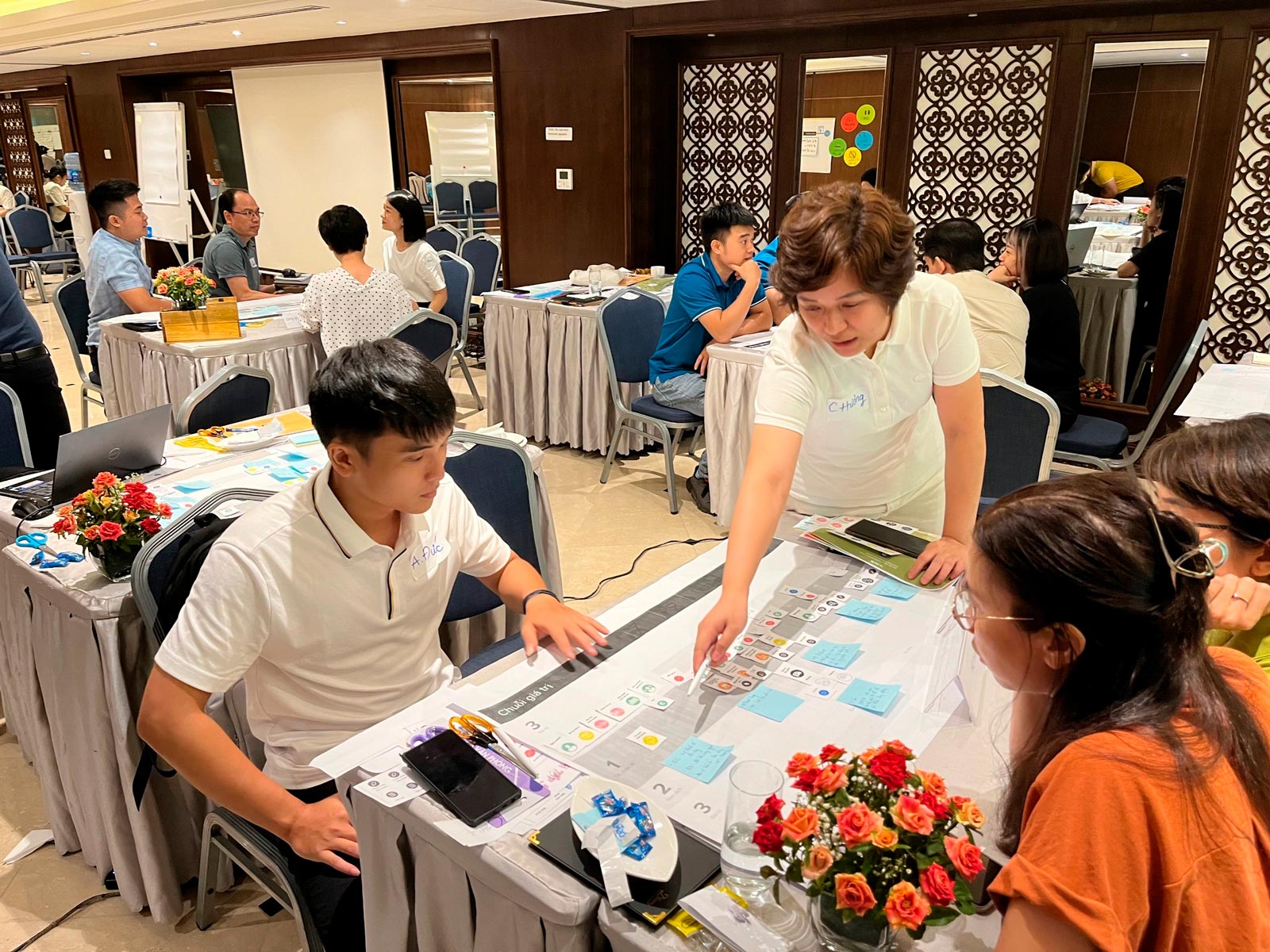
01 Value Chain Mapping
Introduction This guide explores the actors and dynamics that make reuse systems function. You will learn who the different players in the value chain are, what role each plays, and why collaboration between them is critical for scaling reuse. We will look at consumers, brands, packaging providers, retailers, logistics operators, and supporting infrastructure such as washing facilities, warehouses, hardware, and software. You will also examine the challenges and KPIs specific to each actor, and how these differ between refill and return models. By the end, you will understand how all these pieces fit together into an integrated value chain that enables reuse to be both environmentally impactful and financially sustainable.

02 Intro to refil and return
Now that we’ve covered the overarching concepts of reuse it's time to dive deep into the different systems. Based on your responses, Refill was indicated as the most applicable model for your context. To get started, you will learn what makes refill models distinct within reuse systems, starting with their long history and cultural roots. We'll cover two main types of refill (at home and on the go), their characteristics, and how they function in practice. We will explore the advantages and challenges of adopting refill systems, including cost, convenience, consumer behavior, and regulatory factors. You will also examine key elements for success, such as product suitability, packaging choices, and the technologies that enable safe and scalable refill operations. By the end, you will be able to identify which refill approaches are most relevant to your context and outline the first steps toward building or scaling a sustainable refill solution.

03 Go To Market
This guide explores how to design and implement a go-to-market (GTM) strategy for return systems. We begin by outlining the essential elements of such a strategy, including identifying target markets, defining product offerings, and shaping compelling value propositions. You will explore how consumer behavior, motivations, and readiness influence adoption, and how to segment and profile your audience through market research and buyer personas. The section also covers how to assess product–market fit and viability and introduces different business models for B2B and B2C contexts. Attention is given to partnerships and collaborations with brands, retailers, municipalities, and social businesses as critical enablers for scaling. Finally, we examine the role of incentives, financial, behavioral, and regulatory, in shaping consumer and business uptake. By the end, you will understand how to integrate these elements into a coherent strategy that drives refill adoption, ensures long-term viability, and aligns with broader social and environmental objectives.

03 Operations
Introduction to operations Get ready to explore the key operational considerations for refill systems. Successful implementation and scalability of refill solutions hinge on efficient operations, from inventory management, washing and logistics to end of life management. We will highlight differences between B2B and B2C operations, explore packaging options and traceability requirements, and cover the importance of quality assurance and hygiene standards. You will understand bottlenecks such as stock-outs or misaligned procurement processes and gain practical solutions to address them. By the end, you will understand how to structure responsibilities, anticipate challenges, and establish efficient, reliable operations that build trust with users and partners.

05 Finance
This guide explains how to make refill models financially viable. You will learn to map CAPEX and OPEX, plan working capital, and account for compliance costs. We will show you how to build unit economics, set prices for B2C and B2B, and factor losses from spillage and expiry into margins. You will calculate ROI and breakeven, test scenarios with throughput, product mix, and utilization, and use benchmarks from real implementations to sanity-check assumptions. You will also assess scale effects, choose financing options, and apply a practical calculator and templates to forecast cash flow, payback, and investment needs.

06 Marketing
This guide shows how to market refill systems for real adoption. You will define a clear value proposition across economic, environmental, and convenience benefits, and translate it into targeted communications at the point of sale and across digital channels. We’ll cover packaging design as a marketing asset, promotions and campaigns that onboard first-time users, and price strategies that highlight price-per-weight savings. You will learn practical onboarding scripts, loyalty and incentive tools, and behavior change tactics to overcome hygiene and convenience barriers. Guidance on localization, partnerships with brands, NGOs, and municipalities, and retailer enablement is included. You will also track retention and impact, and use a simple strategy chart to connect audience, channels, offers, and metrics into a coherent plan.

07 Measuring Impact
Congratulations! You’ve reached the last guide in Open Reuse where you’ll learn how to measure the environmental, social, and economic impact of your refill system! You will learn to build simple impact models, apply LCA at different depths, and calculate environmental break-even using return rates and packaging design parameters. We will explain how to quantify packaging avoided and associated CO2 reductions, track metrics with practical calculators and baselines, and asses social outcomes such as green jobs and poverty-tax savings. We also cover ESG reporting needs and give clear guidance on transparent impact communication that combines credible data with concise storytelling.

Valoraciones y reseñas de estudiantes

Aún no hay reseñas.
Aún no hay reseñas.
Scroll al inicio